World Nature Conservation Day: How Your Grow Bag Garden Helps the Planet
On July 28, World Nature Conservation Day reminds us that protecting forests, water, and biodiversity is everyone’s responsibility. But here’s the thing: if you’re growing bhindi, karela, and palak in grow bags on your terrace, you’re already doing conservation. This article explains why your balcony garden matters, and how to make it matter even more.
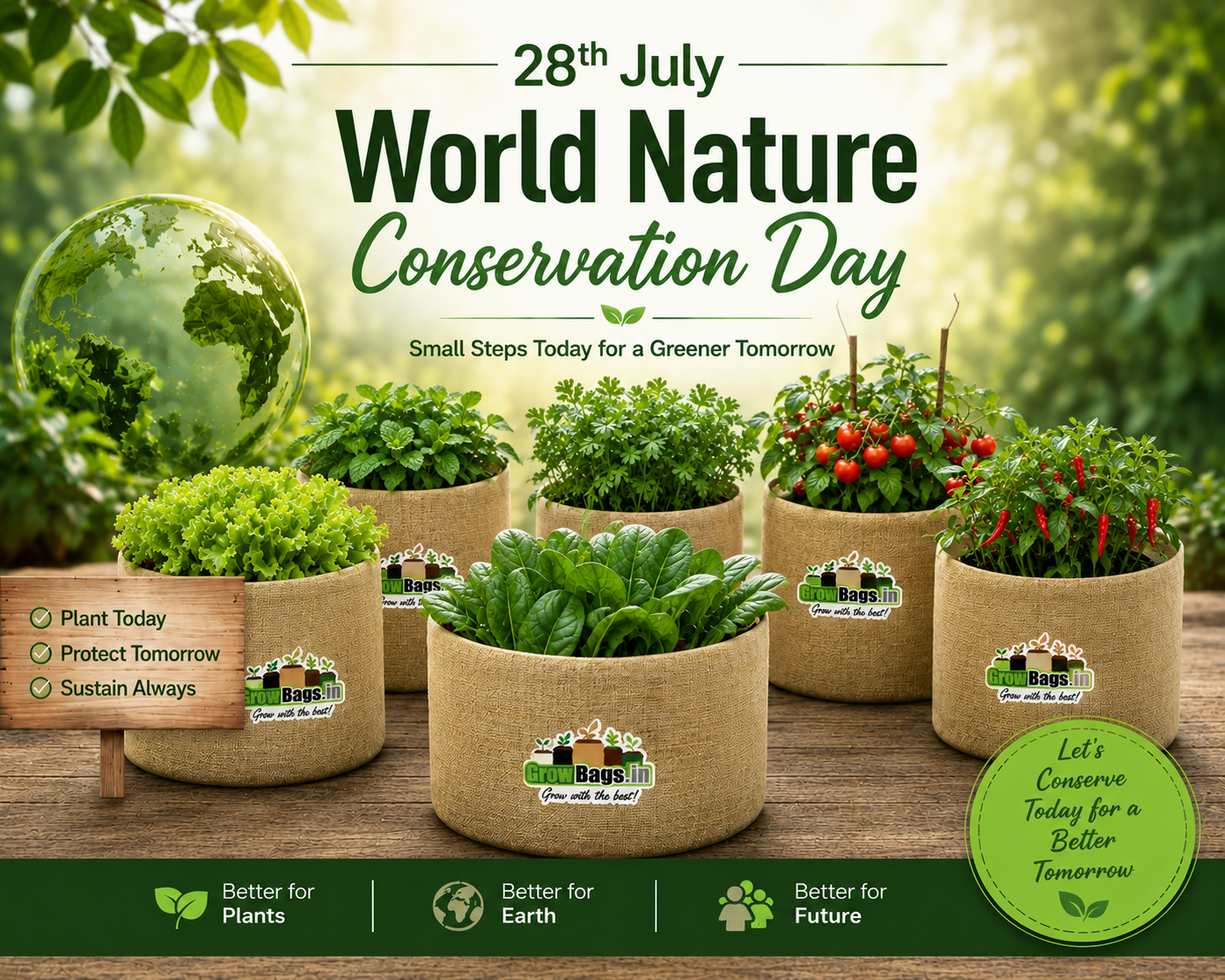
What is World Nature Conservation Day?
World Nature Conservation Day, observed on 28 July each year, reminds us why protecting forests, water, soil, and wildlife is important. For India, where monsoons shape agriculture, groundwater is depleting, and urban sprawl is replacing farmland, conservation feels especially pressing. The day encourages us to think about how our daily choices affect nature: what we eat, how much water we use, and where our food comes from.
From the forests that store carbon and support biodiversity, to the water systems we depend on, to the soil we grow food in, nature conservation touches everything. In India, these challenges are urgent and personal. Nature conservation isn’t separate from daily life; it’s woven through all of it.
How Grow Bags Support Conservation
1. Efficient Use of Space & Water
Growing in grow bags means you water only where plants need it, the root zone, instead of watering an entire garden bed and watching water run off unused. On a small Mumbai balcony, a row of 15×15 grow bags can produce steady harvests of bhindi, brinjal, and leafy greens without the water demand of a larger open plot.
During monsoon, when rain is abundant, your bags drain efficiently so water isn’t wasted as stagnant soil. In summer, when water is scarce, you save thousands of litres by watering only the root zone. Many home gardeners find that grow bags use noticeably less water than open beds because watering is targeted and runoff is minimal.
This efficiency isn’t just good for your water bill. It’s good for your city’s groundwater table and for regions facing drought.
2. Soil Health & Biodiversity
When you fill a grow bag with a mix of cocopeat, vermicompost, and sand, you’re creating a living soil, one that teems with earthworms, microbes, and insects. Unlike chemical-heavy potting mixes, this soil supports a healthy microbiome. Meanwhile, the diversity of crops you’re growing (palak, methi, herbs, chillies in the same terrace) creates a mini-ecosystem that attracts bees and beneficial insects.
If you skip chemical pesticides, a common choice for home gardeners, your soil stays even healthier. Home compost in your soil means recycled kitchen waste and reduced landfill. Your grow bag doesn’t disturb natural topsoil or cause erosion the way tilling large plots does.
Your balcony garden isn’t just producing food. It’s supporting the tiny organisms that keep soil, and the planet, alive.
3. Reduced Food Miles & Emissions
A kilogram of bhindi bought at a supermarket has traveled 500+ kilometers, been stored in cold rooms, wrapped in plastic, and required fuel and emissions at every step. A kilogram of bhindi grown in your 15×15 grow bag travels from plant to kitchen in minutes.
Over a monsoon season, this difference compounds: you’re avoiding unnecessary transport, packaging, and emissions that would otherwise accumulate in the supply chain. Growing seasonally, monsoon vegetables in monsoon, aligns your garden with natural rhythms and reduces pressure on commercial farms that rely on heavy inputs.
It’s one of the simplest ways to reduce the environmental impact of your food, and you get fresh vegetables for dinner.
4. Durable Grow Bags vs. Disposable Plastics
A disposable plastic pot lasts one season before degrading. A quality HDPE grow bag lasts 3–5 seasons, meaning fewer pots in landfills and fewer new resources needed. Fabric bags are similarly durable and breathable, they’re designed to last many seasons, reducing the need for frequent replacement.
When your bag finally reaches end-of-life, it can be disposed of responsibly or recycled where available. Over decades, durability is conservation: fewer resources, less waste. Every time you reuse your grow bag for another season, you’re making a conservation choice.
Practical Conservation Steps for Your Monsoon Garden
Save Water in Your Grow Bag Garden
- Use the finger-test method: Only water when soil is dry 2+ inches down. This prevents overwatering and runoff.
- Mulch your soil surface: 1 inch of dried leaves or straw significantly reduces evaporation, so you water less often.
- Collect monsoon runoff: If possible, position bags to catch and use rainwater for future dry spells (simple water harvesting).
- Use drip irrigation: If you water multiple bags, use drip setups instead of overhead spraying, water reaches roots, not air.
- Water early or late: Water early morning (5–7 AM) or late evening (6–8 PM) to reduce evaporation loss.
- Empty saucers immediately: Don’t let water sit under bags, as it encourages root rot and wastes water.
Choose Eco-Friendly Soil & Inputs
- Make your own compost: Use kitchen scraps (vegetable peels, leaves) to make vermicompost or aerobic compost. This recycles waste and gives you chemical-free nutrients.
- Avoid synthetic fertilisers: Use compost, vermicompost, seaweed extract, or neem-based organic options instead. They feed the soil and the plant.
- Use neem oil & organic pest controls: Instead of chemical pesticides, spray neem oil or use companion planting (basil with tomatoes, etc.). Safer for you, your soil, and pollinators.
- Reuse soil carefully: After harvest, refresh your grow-bag soil with fresh compost for 3–4 seasons.
Important: If soil had root rot or severe disease, discard it or use only for non-edible ornamentals. Never reuse it for edible crops. - Choose sustainable materials: Use cocopeat (byproduct of coconut processing) and perlite (recyclable) instead of peat moss, which damages peatlands.
- Mulch with organics: Use dried grass, leaves, or wood chips, all biodegradable and they improve soil as they break down.
Make Your Monsoon Garden Conservation-Friendly
- Prevent waterlogging: Use the high-drainage monsoon soil mix (40% perlite/sand) to ensure water drains quickly. Healthy drainage keeps soil alive and prevents root rot.
- Elevate bags properly: Place bags on stands, bricks, or gravel so monsoon rain drains through. Never let bags sit directly in pooled rainwater.
- Rotate crops with seasons: Grow monsoon vegetables (bhindi, karela, lauki, palak, brinjal, turai) during July–September. This aligns your garden with natural growing seasons.
- Save seeds: If you have space, let one or two plants flower and seed. Free seeds for next monsoon and preserved local crop varieties.
- Skip chemicals in monsoon: Heavy rain washes chemical pesticides and fertilisers into stormwater drains. Use organic methods exclusively during rains.
- Create water-absorption zones: Position bags to absorb and slow monsoon runoff instead of rushing it off your terrace. This reduces neighbourhood flooding and conserves water.
Plant for Biodiversity
- Grow diverse crops: Instead of 5 bags of tomato, plant tomato, bhindi, chillies, palak, herbs, and flowers. Diversity attracts bees, butterflies, and insects.
- Include herbs & flowers: Basil, coriander, mint, marigold, and nasturtium attract pollinators and repel pests. Bonus: you eat the herbs.
- Avoid monoculture: Growing the same crop season after season depletes soil and attracts pests. Rotate crops yearly.
- Skip pesticides: Let natural pest control work. Aphids attract ladybugs. Caterpillars attract birds. Your garden becomes a living ecosystem.
- Provide water: A small bowl of water helps bees, butterflies, and insects drink during hot season.
- Use companion planting: Grow basil near tomatoes, coriander near beans, marigold near everything. These combinations improve soil, repel pests, and support biodiversity.
Your monsoon terrace garden is alive, with bees pollinating flowers, earthworms building soil, and insects controlling pests naturally.
Involve Your Kids: Nature Conservation Starts at Home
Growing vegetables with children transforms a balcony into a nature classroom. A 6-year-old learns responsibility watering the bhindi plant daily. A 10-year-old discovers why composting kitchen scraps matters. A teenager tracks seasonal patterns and plant rotations, real science, real impact.
When kids see insects pollinating their flowers and earthworms in their soil, they develop respect for biodiversity. Your grow-bag garden isn’t just producing food; it’s raising children who understand that conservation starts at home.
Small Gardens, Big Impact
World Nature Conservation Day is a reminder that big change starts small, with your terrace, your grow bags, your choices. You’re already saving water, building soil health, supporting biodiversity, and reducing food-transport emissions just by growing your own food.
This monsoon season, lean into it. Use the practical conservation steps above to make your garden even more impactful. Start composting your kitchen waste. Grow diverse crops instead of monoculture. Elevate your bags properly. Skip the chemicals. Watch your garden become a thriving ecosystem.
Ready to Deepen Your Conservation Impact?
GrowBags.in supports home gardeners who want to save water, build healthy soil, and grow more of their own food. We provide durable, reusable HDPE and fabric grow bags designed to last multiple seasons, monsoon-ready soil mixes, and free growing guides for common Indian vegetables (bhindi, karela, lauki, palak, brinjal).
Browse our collection:
- Grow Bags: Premium HDPE and fabric options in multiple sizes (12×12, 12×15, 15×15, 18×18, 24×18)
- Monsoon Gardening Guide: Step-by-step tips for drainage, watering, and crop rotation during rains
- Soil Mix Page: Monsoon-ready potting mixes and individual soil amendments (cocopeat, compost, perlite)
Let’s grow a more sustainable India, one terrace at a time. 🌿
Happy gardening, and happy World Nature Conservation Day!
– The GrowBags.in Team
