World Nature Conservation Day: How Your Grow Bag Garden Helps the Planet
On July 28, World Nature Conservation Day reminds us that protecting forests, water, and biodiversity is everyone’s responsibility. But here’s the thing: if you’re growing bhindi, karela, and palak in grow bags on your terrace, you’re already doing conservation. This article explains why your balcony garden matters, and how to make it matter even more.
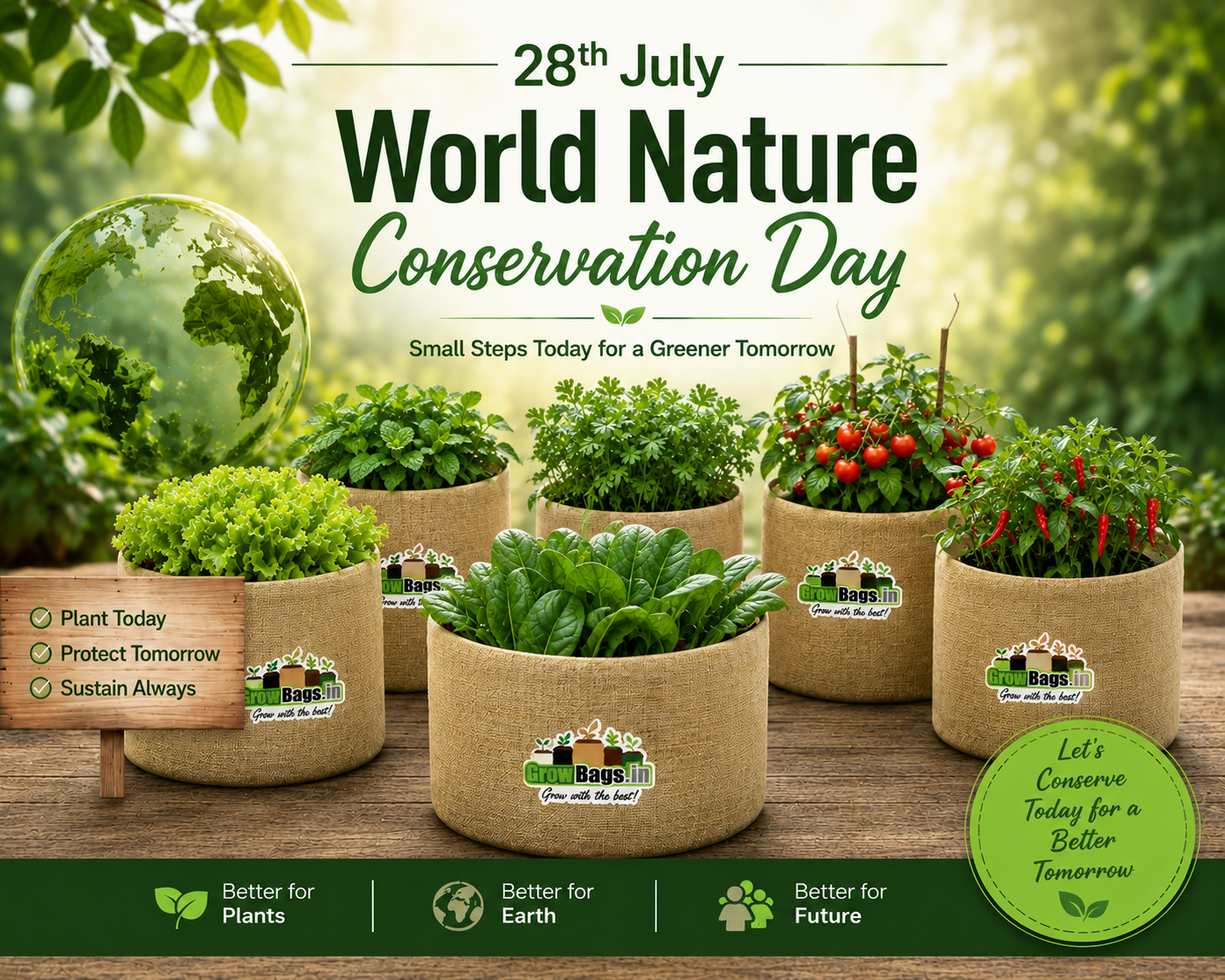
What is World Nature Conservation Day?
World Nature Conservation Day, observed on 28 July each year, reminds us why protecting forests, water, soil, and wildlife is important. For India, where monsoons shape agriculture, groundwater is depleting, and urban sprawl is replacing farmland, conservation feels especially pressing. The day encourages us to think about how our daily choices affect nature: what we eat, how much water we use, and where our food comes from.
From the forests that store carbon and support biodiversity, to the water systems we depend on, to the soil we grow food in, nature conservation touches everything. In India, these challenges are urgent and personal. Nature conservation isn’t separate from daily life; it’s woven through all of it.
How Grow Bags Support Conservation
1. Efficient Use of Space & Water
Growing in grow bags means you water only where plants need it, the root zone, instead of watering an entire garden bed and watching water run off unused. On a small Mumbai balcony, a row of 15×15 grow bags can produce steady harvests of bhindi, brinjal, and leafy greens without the water demand of a larger open plot.
During monsoon, when rain is abundant, your bags drain efficiently so water isn’t wasted as stagnant soil. In summer, when water is scarce, you save thousands of litres by watering only the root zone. Many home gardeners find that grow bags use noticeably less water than open beds because watering is targeted and runoff is minimal.
This efficiency isn’t just good for your water bill. It’s good for your city’s groundwater table and for regions facing drought.
2. Soil Health & Biodiversity
When you fill a grow bag with a mix of cocopeat, vermicompost, and sand, you’re creating a living soil, one that teems with earthworms, microbes, and insects. Unlike chemical-heavy potting mixes, this soil supports a healthy microbiome. Meanwhile, the diversity of crops you’re growing (palak, methi, herbs, chillies in the same terrace) creates a mini-ecosystem that attracts bees and beneficial insects.
If you skip chemical pesticides, a common choice for home gardeners, your soil stays even healthier. Home compost in your soil means recycled kitchen waste and reduced landfill. Your grow bag doesn’t disturb natural topsoil or cause erosion the way tilling large plots does.
Your balcony garden isn’t just producing food. It’s supporting the tiny organisms that keep soil, and the planet, alive.
3. Reduced Food Miles & Emissions
A kilogram of bhindi bought at a supermarket has traveled 500+ kilometers, been stored in cold rooms, wrapped in plastic, and required fuel and emissions at every step. A kilogram of bhindi grown in your 15×15 grow bag travels from plant to kitchen in minutes.
Over a monsoon season, this difference compounds: you’re avoiding unnecessary transport, packaging, and emissions that would otherwise accumulate in the supply chain. Growing seasonally, monsoon vegetables in monsoon, aligns your garden with natural rhythms and reduces pressure on commercial farms that rely on heavy inputs.
It’s one of the simplest ways to reduce the environmental impact of your food, and you get fresh vegetables for dinner.
4. Durable Grow Bags vs. Disposable Plastics
A disposable plastic pot lasts one season before degrading. A quality HDPE grow bag lasts 3–5 seasons, meaning fewer pots in landfills and fewer new resources needed. Fabric bags are similarly durable and breathable, they’re designed to last many seasons, reducing the need for frequent replacement.
When your bag finally reaches end-of-life, it can be disposed of responsibly or recycled where available. Over decades, durability is conservation: fewer resources, less waste. Every time you reuse your grow bag for another season, you’re making a conservation choice.
Practical Conservation Steps for Your Monsoon Garden
Save Water in Your Grow Bag Garden
- Use the finger-test method: Only water when soil is dry 2+ inches down. This prevents overwatering and runoff.
- Mulch your soil surface: 1 inch of dried leaves or straw significantly reduces evaporation, so you water less often.
- Collect monsoon runoff: If possible, position bags to catch and use rainwater for future dry spells (simple water harvesting).
- Use drip irrigation: If you water multiple bags, use drip setups instead of overhead spraying, water reaches roots, not air.
- Water early or late: Water early morning (5–7 AM) or late evening (6–8 PM) to reduce evaporation loss.
- Empty saucers immediately: Don’t let water sit under bags, as it encourages root rot and wastes water.
Choose Eco-Friendly Soil & Inputs
- Make your own compost: Use kitchen scraps (vegetable peels, leaves) to make vermicompost or aerobic compost. This recycles waste and gives you chemical-free nutrients.
- Avoid synthetic fertilisers: Use compost, vermicompost, seaweed extract, or neem-based organic options instead. They feed the soil and the plant.
- Use neem oil & organic pest controls: Instead of chemical pesticides, spray neem oil or use companion planting (basil with tomatoes, etc.). Safer for you, your soil, and pollinators.
- Reuse soil carefully: After harvest, refresh your grow-bag soil with fresh compost for 3–4 seasons.
Important: If soil had root rot or severe disease, discard it or use only for non-edible ornamentals. Never reuse it for edible crops. - Choose sustainable materials: Use cocopeat (byproduct of coconut processing) and perlite (recyclable) instead of peat moss, which damages peatlands.
- Mulch with organics: Use dried grass, leaves, or wood chips, all biodegradable and they improve soil as they break down.
Make Your Monsoon Garden Conservation-Friendly
- Prevent waterlogging: Use the high-drainage monsoon soil mix (40% perlite/sand) to ensure water drains quickly. Healthy drainage keeps soil alive and prevents root rot.
- Elevate bags properly: Place bags on stands, bricks, or gravel so monsoon rain drains through. Never let bags sit directly in pooled rainwater.
- Rotate crops with seasons: Grow monsoon vegetables (bhindi, karela, lauki, palak, brinjal, turai) during July–September. This aligns your garden with natural growing seasons.
- Save seeds: If you have space, let one or two plants flower and seed. Free seeds for next monsoon and preserved local crop varieties.
- Skip chemicals in monsoon: Heavy rain washes chemical pesticides and fertilisers into stormwater drains. Use organic methods exclusively during rains.
- Create water-absorption zones: Position bags to absorb and slow monsoon runoff instead of rushing it off your terrace. This reduces neighbourhood flooding and conserves water.
Plant for Biodiversity
- Grow diverse crops: Instead of 5 bags of tomato, plant tomato, bhindi, chillies, palak, herbs, and flowers. Diversity attracts bees, butterflies, and insects.
- Include herbs & flowers: Basil, coriander, mint, marigold, and nasturtium attract pollinators and repel pests. Bonus: you eat the herbs.
- Avoid monoculture: Growing the same crop season after season depletes soil and attracts pests. Rotate crops yearly.
- Skip pesticides: Let natural pest control work. Aphids attract ladybugs. Caterpillars attract birds. Your garden becomes a living ecosystem.
- Provide water: A small bowl of water helps bees, butterflies, and insects drink during hot season.
- Use companion planting: Grow basil near tomatoes, coriander near beans, marigold near everything. These combinations improve soil, repel pests, and support biodiversity.
Your monsoon terrace garden is alive, with bees pollinating flowers, earthworms building soil, and insects controlling pests naturally.
Involve Your Kids: Nature Conservation Starts at Home
Growing vegetables with children transforms a balcony into a nature classroom. A 6-year-old learns responsibility watering the bhindi plant daily. A 10-year-old discovers why composting kitchen scraps matters. A teenager tracks seasonal patterns and plant rotations, real science, real impact.
When kids see insects pollinating their flowers and earthworms in their soil, they develop respect for biodiversity. Your grow-bag garden isn’t just producing food; it’s raising children who understand that conservation starts at home.
Small Gardens, Big Impact
World Nature Conservation Day is a reminder that big change starts small, with your terrace, your grow bags, your choices. You’re already saving water, building soil health, supporting biodiversity, and reducing food-transport emissions just by growing your own food.
This monsoon season, lean into it. Use the practical conservation steps above to make your garden even more impactful. Start composting your kitchen waste. Grow diverse crops instead of monoculture. Elevate your bags properly. Skip the chemicals. Watch your garden become a thriving ecosystem.
Ready to Deepen Your Conservation Impact?
GrowBags.in supports home gardeners who want to save water, build healthy soil, and grow more of their own food. We provide durable, reusable HDPE and fabric grow bags designed to last multiple seasons, monsoon-ready soil mixes, and free growing guides for common Indian vegetables (bhindi, karela, lauki, palak, brinjal).
Browse our collection:
- Grow Bags: Premium HDPE and fabric options in multiple sizes (12×12, 12×15, 15×15, 18×18, 24×18)
- Monsoon Gardening Guide: Step-by-step tips for drainage, watering, and crop rotation during rains
- Soil Mix Page: Monsoon-ready potting mixes and individual soil amendments (cocopeat, compost, perlite)
Let’s grow a more sustainable India, one terrace at a time. 🌿
Happy gardening, and happy World Nature Conservation Day!
– The GrowBags.in Team
The Complete Monsoon Grow Bag Gardening Guide: Planting, Sizing & Fertilizing for July-August
Introduction: Why Your Balcony Can Thrive in the Monsoon
Ever wondered why your balcony plants look lush one day and wilted the next, right after a week of steady rain? You’re not alone. Many urban gardeners find the monsoon challenging: waterlogged containers, yellowing leaves, and sudden fungal outbreaks are common frustrations.
The culprit is rarely the rain itself, but rather the wrong container setup, poor drainage, and inconsistent feeding habits. The good news? The July–August monsoon window can be a productive period for grow bag gardening when managed well. The abundant moisture, reduced heat stress, and moderate temperatures create favorable conditions for fast-growing leafy greens, vibrant root vegetables, and prolific fruiting crops, provided you get three things right:
-
Matching crops to your climate zone (and microclimate)
-
Choosing the correct grow bag size in inches for each vegetable
-
Implementing a flexible feeding schedule that compensates for rain-induced nutrient leaching
This guide provides zone-wise planting charts, flexible feeding plans, drainage solutions, and practical troubleshooting, all grounded in real-world gardening experience.
📌 Important Note: All harvest times, yields, costs, and bag lifespans mentioned in this guide are approximate estimates based on typical home-garden conditions. Actual results will vary by variety, climate, soil quality, and individual management practices. Always observe your plants and adjust accordingly.
Part 1: Crop & Grow Bag Size Selection by Zone
India’s monsoon behavior varies significantly even within states. The following advice is grouped by broad climatic zones, use it as a starting point, and always check with your local nursery or Krishi Vigyan Kendra for microclimate-specific recommendations.
🌾 North Plains (Punjab, Haryana, Delhi, Western UP, East Rajasthan)
Typical climate: Warm & humid with moderate to heavy rainfall
Key Challenge: Fungal growth can be an issue during warm, wet spells. Prioritize good airflow and consider disease-resistant varieties where available.
Best Crops & Grow Bag Sizes (in inches):
| Crop | Grow Bag Size | Sunlight Needs | Typical Harvest Time | Approx. Yield per Bag | Notes |
|---|---|---|---|---|---|
| Spinach (Palak) | 9×9, 9×12 | Partial to full sun | 25–35 days | 4–5 harvests (~300g total) | Cut-and-come-again; fast-growing |
| Amaranth (Chauli) | 9×9, 9×12 | Full sun | 20–30 days | 3–4 harvests (~250g total) | Heat-tolerant; nutritious |
| Radish (Mooli) | 12×12, 18×12 (depth) | Full sun | 35–45 days | 8–10 radishes per bag | Depth critical; loosen soil well |
| Okra (Bhindi) | 12×15, 15×15 | Full sun | 50–60 days | 15–20 pods per plant | Pick when tender (3–4 inches) |
| Cucumber | 15×15, 18×18 | Full sun | 55–65 days | 8–12 fruits per plant | Needs trellis; good airflow |
| Bottle Gourd (Lauki) | 18×18, 18×24 | Full sun | 65–75 days | 5–8 fruits per vine | Vigorous vine; strong support needed |
| Bush Beans | 12×15, 15×15 | Full sun | 50–60 days | 20–30 pods per plant | Compact; no trellis needed |
Approximate cost to fill: ₹40–60 per 12×15 bag (varies by location and material availability)
Pro Tip: 🌟 Space grow bags at least 2 feet apart to ensure airflow, this helps reduce fungal issues in humid conditions.
🌴 South & Coastal Areas (Tamil Nadu, Kerala, Karnataka, Andhra, Coastal Maharashtra)
Typical climate: Tropical, hot & humid with heavy rainfall and intense sun between showers
Key Challenge: Leaf scorch during sunny breaks. Thick mulching and partial shade during peak sun hours are helpful.
Best Crops & Grow Bag Sizes (in inches):
| Crop | Grow Bag Size | Sunlight Needs | Typical Harvest Time | Approx. Yield per Bag | Notes |
|---|---|---|---|---|---|
| Chilli (Green/Red) | 9×12, 12×12 | Full sun | 65–85 days | 20–30 chillies per plant | Prefers warmth; harvest over weeks |
| Brinjal (Eggplant) | 12×15, 15×15 | Full sun | 70–80 days | 6–8 fruits per plant | Stake for support; harvest glossy |
| Tomato | 12×15, 15×15 | Full sun | 65–80 days | 10–15 fruits per plant | Transplants preferred; stake well |
| Cucumber | 18×18, 18×24 | Full sun | 55–65 days | 8–12 fruits per plant | Heat-tolerant varieties best |
| Turmeric | 18×12, 24×12 (wide) | Partial sun | 8–9 months | 200–300g rhizomes per bag | Harvest after leaves dry and yellow |
| Ginger | 18×12, 24×12 | Partial sun | 7–8 months | 150–250g rhizomes per bag | Shallow, wide bags ideal |
| Amaranth | 9×9, 9×12 | Full sun | 20–30 days | 3–4 harvests (~250g total) | Quick green; thrives in heat |
Approximate cost to fill: ₹45–65 per 12×15 bag
Pro Tip: 🌟 Apply a 3-inch layer of coconut coir or paddy straw as mulch. This helps keep roots cool during hot spells and reduces soil splash during heavy rains.
🌊 High Rainfall Areas (West Bengal, Odisha, Bihar, Jharkhand, Assam, NE States)
Typical climate: Very high rainfall (often 2000+ mm annually) with high humidity
Key Challenge: Waterlogging is the primary risk. Fabric grow bags are usually the preferred choice here for their superior drainage. Elevation is essential.
Best Crops & Grow Bag Sizes (in inches):
| Crop | Grow Bag Size | Sunlight Needs | Typical Harvest Time | Approx. Yield per Bag | Notes |
|---|---|---|---|---|---|
| Spinach (Palak) | 9×9, 9×12 | Partial to full sun | 25–35 days | 4–5 harvests (~300g total) | Quick harvest; cut outer leaves |
| Fenugreek (Methi) | 9×9, 9×12 | Partial to full sun | 20–30 days | 3–4 harvests (~200g total) | Fast-growing; prefers cooler weather |
| Bottle Gourd | 18×18, 18×24 | Full sun | 65–75 days | 5–8 fruits per vine | Elevate bags well (10 cm minimum) |
| Ridge Gourd (Tori) | 18×18, 18×24 | Full sun | 60–70 days | 6–10 fruits per vine | Strong trellis needed |
| Climbing Beans | 15×15, 18×18 | Full sun | 55–65 days | 25–35 pods per plant | Support required; pick young |
| Taro (Arbi) | 18×12, 24×12 | Partial sun | 7–9 months | 300–500g corms per bag | Moisture-loving but needs drainage |
| Ginger | 18×12, 24×12 | Partial sun | 7–8 months | 150–250g rhizomes per bag | Use disease-free rhizomes |
Approximate cost to fill: ₹50–70 per 18×18 bag
Pro Tip: 🌟 Elevate grow bags a full 10 cm (4 inches) using bricks or wooden pallets. During extreme rain events, consider moving bags under a temporary transparent shelter.
☀️ Semi-Arid West & Central (Gujarat, Interior Maharashtra, West Rajasthan, Madhya Pradesh)
Typical climate: Patchy, moderate monsoon with dry spells between downpours
Key Challenge: Irrigation management, some weeks are dry, others have sudden downpours. Overwatering during dry breaks is a common mistake.
Best Crops & Grow Bag Sizes (in inches):
| Crop | Grow Bag Size | Sunlight Needs | Typical Harvest Time | Approx. Yield per Bag | Notes |
|---|---|---|---|---|---|
| Leafy Greens | 9×9, 9×12 | Partial to full sun | 20–30 days | 3–4 harvests (~250g total) | Heat-tolerant varieties recommended |
| Tomato | 12×15, 15×15 | Full sun | 65–80 days | 10–15 fruits per plant | Stake well; water consistently |
| Brinjal | 12×15, 15×15 | Full sun | 70–80 days | 6–8 fruits per plant | Harvest when glossy; avoid overwatering |
| Chilli | 9×12, 12×12 | Full sun | 65–85 days | 20–30 chillies per plant | Thrives in heat; pick regularly |
| Cluster Beans (Guar) | 18×12, 18×18 | Full sun | 50–60 days | 25–35 pods per plant | Drought-tolerant once established |
| Okra (Bhindi) | 18×12, 18×18 | Full sun | 50–60 days | 15–20 pods per plant | Pick tender; avoid waterlogging |
Approximate cost to fill: ₹40–60 per 12×15 bag
Pro Tip: 🌟 Water only when the top 2–3 inches of soil are completely dry, even if it rained lightly the day before. Overwatering is a leading cause of plant loss in this region.
👩🌾 Beginner vs. Advanced: Where to Start
🌱 Beginners (Start Here):
-
Focus on leafy greens (spinach, methi, amaranth) – forgiving and fast
-
Stick to 1 crop per bag initially
-
Harvest early and often – builds confidence
🌿 Intermediate Gardeners:
-
Add fruiting crops (tomato, chilli, brinjal)
-
Experiment with trellising for cucumbers and gourds
-
Try root vegetables (radish) in deeper bags
-
Begin companion planting (marigolds with tomatoes)
🌳 Advanced Gardeners:
-
Grow long-season crops (turmeric, ginger, taro)
-
Manage multiple harvests from same bag
-
Experiment with soil solarization and bio-inoculants
-
Create polyculture setups (greens + herbs in same bag)
Part 2: The Monsoon-Ready Soil Mix & Drainage Setup
Your soil mix is the foundation of monsoon success. It should drain well while retaining enough moisture for roots between rains.
Recommended Soil Mix (with Budget Alternatives)
| Ingredient | Percentage | Role | Budget Alternative |
|---|---|---|---|
| Potting Mix / Garden Soil | 50% | Base structure | Red soil + well-rotted FYM (1:1) |
| Vermicompost / Compost | 30% | Nutrition | Well-decomposed kitchen compost |
| Coarse Sand | 15–20% | Drainage | Builder’s sand (rinsed) |
| Perlite or Cocopeat | 5–10% | Aeration | Extra 5% sand + 5% cocopeat |
Approximate Cost per 12×15 grow bag: ₹40–60 depending on local availability and material costs.
Important: Garden soil alone is generally not recommended for monsoon grow bags, it compacts easily and can hold excessive moisture. A lighter, cocopeat-based mix often performs better during heavy rains.
Reusing Soil from Previous Seasons
-
After harvest, empty the soil and spread it on a tarpaulin to dry.
-
Remove old roots and debris.
-
Refresh by mixing in 30% fresh compost and 10% fresh cocopeat or sand.
-
Boost with bio-inoculants: Consider adding Trichoderma (for disease suppression) or mycorrhiza (for better nutrient uptake) when refreshing soil. These are increasingly available at garden centers and can significantly improve plant health.
-
For disease concerns, solarize the soil (cover with clear plastic for 4–6 weeks in summer sun) or simply replace with fresh mix for the most sensitive crops.
Drainage Setup (Essential Steps)
-
✅ Fabric grow bags are usually the preferred choice, they breathe and drain naturally. Well-drained plastic containers with multiple holes can also work effectively.
-
✅ If using plastic pots, punch 8–10 extra drainage holes at the bottom and sides.
-
✅ Elevate bags 5–10 cm using bricks, tiles, or wooden pallets.
-
✅ Avoid adding a gravel layer at the bottom, this can create a “perched water table” effect that may worsen drainage.
The Mulching Mandate
Apply 2–3 cm of organic mulch soon after planting:
-
Dry neem leaves (may help repel some pests)
-
Paddy straw (excellent moisture retention)
-
Coconut coir (good aeration)
-
Dry grass clippings (ensure they’re seed-free)
Why it matters: Mulch reduces soil splash (which can spread fungal spores) and helps keep roots cool during sunny breaks.
Watering Guidelines for Monsoon
-
☔ During heavy rains: Stop watering completely. Allow natural rainfall to suffice.
-
🌤️ During dry breaks: Water at the base (never overhead) when the top 2–3 inches of soil feels dry. Note that this is a general rule, leafy greens generally prefer more consistent moisture, while chillies and okra tolerate drier conditions.
-
💧 After continuous rain: Check that your bags are draining properly. If water pools on top, gently tilt the bag to drain excess.
Part 3: A Flexible Fertilizer Schedule for Grow Bags
Why Grow Bag Plants Need Extra Feeding
In grow bags, nutrients tend to leach out faster than in ground soil, especially during monsoon rains and frequent watering. A consistent feeding routine helps maintain healthy growth. The following is a starter schedule, adjust based on your specific crops, local conditions, and plant responses.
Understanding the 3 Growth Phases
| Phase | Typical Timeline | What’s Happening | Nutrient Focus | Fertilizer Examples |
|---|---|---|---|---|
| 🌱 Vegetative | Weeks 1–4 | Building leaves, stems, roots | Nitrogen (N) | Vermicompost, Fish Emulsion, Neem Cake |
| 🌸 Flowering | Weeks 5–6 | Bud formation, flower production | Phosphorus (P) | Bone Meal, Rock Phosphate |
| 🍅 Fruiting | Week 7+ | Fruit set, swelling, ripening | Potassium (K) | Seaweed Extract, Wood Ash, Banana Peel Compost |
Example Feeding Schedule (Adjust Based on Crop Response)
━━━━━━━━━━━━━━━━━━━━━━━━━━━━━━━━━━━━━━━━━━━━━━━━━━━━━━━━━━━━━
📆 FLEXIBLE FEEDING CALENDAR FOR GROW BAGS
━━━━━━━━━━━━━━━━━━━━━━━━━━━━━━━━━━━━━━━━━━━━━━━━━━━━━━━━━━━━━

🌱 AT PLANTING (Day 0)
   └─ Mix Vermicompost (100g) + Neem Cake (50g) into top 4 inches
   └─ 🎯 Base nutrition + mild pest deterrence

⬇️ WEEK 2 (Optional)
   └─ Liquid Seaweed Extract (1:50 dilution) - Soil drench
   └─ 🎯 Root establishment + trace minerals

⬇️ WEEK 4
   └─ Vermicompost Top-Dressing (100g per 12x15 bag)
   └─ 🎯 Nitrogen boost for leafy growth

⬇️ WEEK 5–6 (When first buds appear)
   └─ Fish Emulsion (1:10 dilution) - Soil drench
   └─ OR Bone Meal (50g) mixed into topsoil
   └─ 🎯 Phosphorus for flowers & strong roots

⬇️ WEEK 7+ (Fruit set begins)
   └─ Seaweed Extract (foliar spray) + Wood Ash (surface sprinkle, ~20g per bag)
   └─ 🎯 Potassium for fruit development

⬇️ EVERY 2–3 WEEKS (Throughout growth)
   └─ Liquid Organic Fertilizer (alternate soil drench & foliar)
   └─ 🎯 Ongoing maintenance nutrition

━━━━━━━━━━━━━━━━━━━━━━━━━━━━━━━━━━━━━━━━━━━━━━━━━━━━━━━━━━━━━
🔑 LEGEND: 🌱 Nitrogen | 🌸 Phosphorus | 🍅 Potassium
━━━━━━━━━━━━━━━━━━━━━━━━━━━━━━━━━━━━━━━━━━━━━━━━━━━━━━━━━━━━━
📊 Infographic: Feeding Schedule at a Glance
   🌱 AT PLANTING        ⬇️ WEEK 2 (opt.)     ⬇️ WEEK 4
┌─────────────────┐  ┌─────────────────┐  ┌─────────────────┐
│ Vermicompost    │  │ Seaweed Extract │  │ Vermicompost    │
│ + Neem Cake     │→ │ (1:50 drench)   │→ │ Top-Dressing    │
│ (Top 4 inches)  │  │ Root boost      │  │ Nitrogen boost  │
└─────────────────┘  └─────────────────┘  └─────────────────┘

   ⬇️ WEEK 5–6           ⬇️ WEEK 7+           ⬇️ EVERY 2–3 WEEKS
┌─────────────────┐  ┌─────────────────┐  ┌─────────────────┐
│ Fish Emulsion   │  │ Seaweed Spray   │  │ Liquid Organic  │
│ OR Bone Meal    │→ │ + Wood Ash      │→ │ Fertilizer      │
│ (Budding phase) │  │ (Fruiting)      │  │ (Maintenance)   │
└─────────────────┘  └─────────────────┘  └─────────────────┘
Crop-Specific Feeding Tips
| Crop Type | Vegetative Phase | Flowering Phase | Fruiting Phase | Special Notes |
|---|---|---|---|---|
| 🍅 Tomatoes & Chillies | Vermicompost | Bone Meal | Wood Ash + Seaweed | Extra potassium may help prevent blossom-end rot |
| 🥬 Leafy Greens | Fish emulsion every 2 weeks | N/A (harvest before flowering) | N/A | Avoid excess phosphorus, it’s unnecessary |
| 🥕 Root Veggies | Balanced NPK | Bone meal | Wood Ash | Excessive nitrogen can cause forked roots |
| 🥒 Gourds | Vermicompost monthly | Bone meal at vine branching | Seaweed every 10–14 days | These are often heavy feeders |
Monsoon Adjustments
-
☔ Reduce solid fertilizer application during continuous rain (it may wash away). Switch to liquid feeds applied during dry breaks.
-
🌡️ Consider increasing seaweed extract frequency to every 10 days during heat waves, it can help plants cope with stress.
-
⏰ Apply fertilizer in the early morning after watering, avoid applying during peak heat.
Part 4: Common Challenges & Practical Fixes
Zone-Specific Considerations
| Zone | Primary Challenge | Why It Happens | Practical Approach |
|---|---|---|---|
| North Plains | Powdery mildew | Warm, humid nights | Neem oil spray (weekly); ensure bag spacing |
| South/Coastal | Leaf scorch between rains | Intense sun on wet leaves | Partial shade during 11 AM–3 PM; thick mulch |
| High Rainfall | Waterlogging risk | 2000+ mm annual rain | Fabric bags + 10 cm elevation; shelter during cloudbursts |
| Semi-Arid | Erratic irrigation | Patchy rainfall; dry spells | Water only when top 2 inches dry; finger test |
Disease & Pest Management (Organic Approaches)
| Problem | Symptoms | Prevention | Organic Response |
|---|---|---|---|
| Root Rot | Yellow leaves, wilting, foul smell | Fabric bags, elevation, coarse mix | Tilt bag to drain; loosen soil; reduce watering |
| Powdery Mildew | White powder on leaves | Airflow, avoid overhead watering | Remove affected leaves; spray neem oil or potassium bicarbonate |
| Downy Mildew | Yellow spots, fuzzy underside | Good airflow; resistant varieties | Remove affected leaves; neem oil spray |
| Aphids | Sticky leaves, curled shoots | Attract beneficial insects | Mild soap-water spray (test first); neem oil |
| Caterpillars | Chewed leaves, visible larvae | Keep area clean; netting | Hand-pick; BT (Bacillus thuringiensis) or neem spray |
🎯 The Complete Monsoon Gardening Checklist
-
Climate Check: Selected crops suited to your zone (North Plains/South Coastal/High Rainfall/Semi-Arid)
-
Sunlight Assessment: Matched crops to available sunlight (full sun vs. partial)
-
Grow Bag Size: Chosen appropriate dimensions (9×9 for greens, 18×18 for vines, etc.)
-
Soil Mix: Prepared monsoon-ready mix (with cocopeat or sand for drainage)
-
Bio-inoculants: Considered adding Trichoderma or mycorrhiza for soil health
-
Drainage: Elevated bags 5–10 cm off the floor
-
Mulch: Applied 2–3 cm organic mulch (neem, straw, or coir)
-
Feeding Plan: Scheduled flexible feeding (see calendar above)
-
Pest Monitoring: Check leaves regularly for spots or pests, especially after rain
-
Watering Discipline: Water only when top 2–3 inches soil is dry (adjust by crop)
-
Airflow: Spaced bags at least 2 feet apart
-
Harvest Planning: Know typical harvest windows (leafy greens: 20–35 days; tomatoes: 65–80 days)
🌟 Sample 6-Bag Planting Plans
North Plains Balcony:
-
Bag 1–2: Spinach + Amaranth (9×12) – harvest in ~25 days; partial sun OK
-
Bag 3–4: Okra + Cucumber (15×15) – full sun; trellis recommended
-
Bag 5–6: Radish + Bush Beans (12×12) – full sun; quick root crop
South/Coastal Balcony:
-
Bag 1–2: Chilli + Brinjal (12×15) – full sun; harvest over several weeks
-
Bag 3–4: Tomato + Cucumber (15×15) – full sun; stake tomatoes
-
Bag 5–6: Turmeric + Ginger (18×12) – partial sun; long-season crops (~8 months)
High Rainfall Balcony:
-
Bag 1–2: Methi + Spinach (9×9) – partial sun; continuous cutting
-
Bag 3–4: Bottle Gourd + Ridge Gourd (18×18) – full sun; strong trellis
-
Bag 5–6: Taro + Ginger (18×12) – partial sun; elevated on pallets
Semi-Arid Balcony:
-
Bag 1–2: Tomato + Brinjal (15×15) – full sun; morning sun ideal
-
Bag 3–4: Chilli + Okra (12×15) – full sun; drought-tolerant choices
-
Bag 5–6: Cluster Beans + Leafy Greens (18×12) – full sun; Guar grows tall; greens for quick harvest
❓ Frequently Asked Questions
Q1: Can I reuse grow bags next season?
Yes, fabric grow bags can often last several seasons, though durability depends on fabric quality, sun exposure, and handling (approximately 2–4 seasons is a realistic expectation). After harvest, empty the soil, wash the bag with mild soap and water, allow it to dry completely, and store in a cool, dry place. For the soil, refresh with 30% new compost and 10% fresh cocopeat/sand, or replace entirely for disease-prone crops.
Q2: Can I mix multiple crops in one grow bag?
Yes, with careful planning! Good combinations include:
-
Greens + herbs: Spinach + coriander (both shallow-rooted)
-
Tall + short: Tomato + basil (basil benefits from tomato’s shade)
-
Avoid: Mixing heavy feeders (tomato + brinjal) in the same bag, they compete
-
Rule of thumb: Use larger bags (15×15 or bigger) for mixed planting; maintain spacing
Q3: What’s the cheapest soil mix alternative?
Use 40% garden soil + 30% well-rotted cow dung or kitchen compost + 30% coarse sand/cocopeat. This reduces cost while maintaining reasonable drainage. Avoid using 100% garden soil, it tends to compact too much during monsoon.
Q4: How often should I fertilize during continuous rain?
Reduce solid fertilizer applications during prolonged rain (they may wash away). Switch to liquid organic feeds applied during dry breaks, approximately every 10–14 days. Monitor plant color and growth, dark green indicates adequate nitrogen; pale or slow growth may indicate a need for feeding.
Q5: My plant leaves are turning yellow, what could be wrong?
Yellowing can indicate several issues:
-
Overwatering (common in monsoon) – check drainage, reduce watering
-
Nutrient deficiency – consider liquid seaweed or balanced liquid fertilizer
-
Pest infestation – check leaf undersides for aphids or mites
-
Root damage – gently check root health
Assess all factors before taking action.
Q6: Can I grow root vegetables like carrots in shallow grow bags?
Depth is important. Use at least 12×12 or 18×12 (height = 12 inches) for carrots, radish, and other root crops. Shallow bags (9 inches or less) often result in stunted or forked roots. Always check the depth dimension.
Q7: What’s the best way to protect grow bags from strong wind during storms?
During severe storms, move bags to a sheltered location (balcony corner, under a roof). For permanent setups, consider creating a windbreak using bamboo screens, tall plants, or balcony railings. Ensure bags are elevated and not sitting in pooled water.
Q8: Are plastic grow bags as good as fabric ones?
Fabric bags generally offer better drainage and root aeration, especially in monsoon conditions. However, well-drained plastic containers with multiple drainage holes can also work effectively. The key is ensuring water doesn’t stagnate inside the bag.
Q9: How do I know when to harvest leafy greens?
Harvest when leaves are large enough to eat – typically 20–35 days after sowing depending on variety. Use the “cut-and-come-again” method: snip outer leaves at the base, leaving the center to regrow. This often provides multiple harvests from the same bag.
Q10: How do I manage grow bags on a small balcony with limited sun?
For balconies with less than 4–5 hours of direct sun:
-
Prioritize leafy greens (spinach, methi, amaranth) – they tolerate partial shade
-
Avoid heavy fruiting crops (tomatoes, gourds) which need more sun
-
Use reflective surfaces (white walls, mirrors) to bounce light
-
Rotate bags weekly for even light exposure
-
Consider shade cloth during the hottest part of the day if scorching is an issue
Q11: Can I grow in grow bags during the monsoon if I live in a high-rise with strong wind?
Yes, but take precautions:
-
Use heavier grow bag sizes (larger bags are more stable)
-
Place bags close together or against a wall for support
-
Use sturdy trellises anchored to railings
-
Consider windbreak netting
-
Move smaller bags indoors during severe storms
🏁 Conclusion: Your Monsoon Garden, Transformed
With the right grow bag size, a zone-aware crop selection, a well-draining soil mix, and a consistent feeding schedule, your monsoon garden can be remarkably productive, all from your balcony or terrace.
The guiding principle: work with the rain, not against it. Good drainage, airflow, and mindful watering are your best allies. Start sowings by late July to catch the monsoon’s peak growth window, and enjoy fresh, organic vegetables through the season.
Remember: every gardener learns through experience. Start small, observe closely, and adjust as you go. Your plants will signal their needs, you just need to pay attention.
💬 Join the Conversation!
👉 Share your monsoon grow bag setup in the comments! Which zone are you gardening in, and what are you planting this July–August?
📩 Subscribe to our newsletter for seasonal planting guides, DIY organic fertilizer recipes, and exclusive grow bag tips delivered monthly.
📸 Tag us with #MonsoonGrowBag on Instagram to showcase your garden, we’d love to feature your setup!
📌 Pin this guide to your gardening board on Pinterest for future reference!
📌 Related Posts (Internal Links)
-
🥶 Best Winter Grow Bag Crops for North India
-
🌿 DIY Organic Fertilizers from Kitchen Waste
-
🌸 How to Trellis Vines in Small Balconies
-
💧 Water-Saving Techniques for Urban Gardeners
External Resource: For region-specific advice, consult your local Krishi Vigyan Kendra (KVK) for verified recommendations tailored to your microclimate.
📋 Quick Reference Card (Printable)
┌─────────────────────────────────────────────────────────────────┐
│  MONSOON GROW BAG CHEAT SHEET                                  │
├─────────────────────────────────────────────────────────────────┤
│  GROW BAG SIZES (in inches):                                   │
│  • Leafy Greens → 9x9, 9x12                                   │
│  • Root Crops → 12x12, 18x12                                  │
│  • Fruiting Crops → 12x15, 15x15, 18x18                       │
│  • Vines → 18x24, 24x24                                       │
│  • Rhizomes → 18x12, 24x12                                    │
├─────────────────────────────────────────────────────────────────┤
│  SUNLIGHT NEEDS (general guide):                               │
│  • Full sun (6+ hrs): Tomatoes, chillies, okra, gourds        │
│  • Partial sun (3-5 hrs): Leafy greens, ginger, turmeric      │
├─────────────────────────────────────────────────────────────────┤
│  SOIL MIX (per bag): 50% Soil + 30% Compost + 20% Sand/Cocopeat│
│  MULCH: 2–3 cm (neem/straw/coir)                              │
│  ELEVATION: 5–10 cm off ground                                │
│  WATER: Only when top 2–3 inches dry (adjust by crop)        │
├─────────────────────────────────────────────────────────────────┤
│  FLEXIBLE FEEDING SCHEDULE:                                    │
│  Day 0: Vermicompost + Neem Cake                              │
│  Week 2: Seaweed Extract (optional)                           │
│  Week 4: Vermicompost Top-Dressing                            │
│  Week 5–6: Fish Emulsion OR Bone Meal (budding phase)         │
│  Week 7+: Seaweed + Wood Ash (fruiting phase)                │
│  Every 2–3 weeks: Liquid Organic Fertilizer                   │
├─────────────────────────────────────────────────────────────────┤
│  QUICK TROUBLESHOOTING:                                        │
│  Yellow leaves → Check water, nutrients, pests, roots         │
│  White powder → Powdery mildew → neem oil + airflow          │
│  Wilting + foul smell → Root rot → improve drainage          │
│  Holes in leaves → Caterpillars → hand-pick or BT spray      │
├─────────────────────────────────────────────────────────────────┤
│  ⚠️ All harvest times, yields, and costs are approximate      │
│  estimates. Actual results vary by variety, climate,          │
│  and management.                                              │
└─────────────────────────────────────────────────────────────────┘
